Drought-Resilient Irrigation Tools That Are Changing the Game
🌿 Drought‑Resilient Irrigation Tools That Are Changing the Game
As climate pressures and water scarcity intensify, 2025 sees a surge in innovation-driven irrigation solutions designed to conserve water while maintaining robust crop production. From precision sensors to solar-powered robotics, these tools empower farmers to manage drought conditions more effectively and sustainably.
1. Subsurface Textile Irrigation (SSTI)
Built to deliver water and nutrients directly into the root zone—buried beneath the soil—SSTI uses geotextiles to spread moisture horizontally from drip lines, allowing up to 50–75% water savings compared to surface systems. It supports more efficient fertigation, reduces evaporation and runoff, and permits safe use of recycled water without surfacing runoff (even over cyclical irrigation)—translating to healthier crops and dramatically lower water use Irrigationdesign+2sensoterra.com+2Wikipedia.
2. Real-Time Soil Moisture & Weather Sensors with AI Scheduling
Leading 2025 smart irrigation platforms integrate soil moisture sensors and weather data to deliver irrigation precisely when and where crops need it. These systems—enabled by AI and machine learning—predict drought cycles and schedule watering accordingly, reducing water waste and ensuring optimal moisture levels IrrigationdesignFarmonautsensoterra.com.
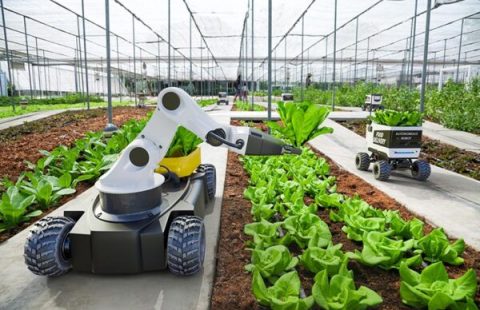
3. Remote Robotic Irrigation Units
Companies are launching remotely controlled robotic irrigation units, operable via mobile apps. These robots can navigate to dry zones, apply water as needed, and automatically halt irrigation when rain is detected. They’ve shown success in drought-challenged settings such as Rwanda and Niger, offering smart irrigation control even without full physical presence in the field allAfrica.com.
4. Solar-Powered IoT Pumps & Controllers
Combined with solar-powered pumps, IoT-based irrigation systems are transforming dryland farming, especially in off-grid regions. Leveraging real-time sensor feedback and remote connectivity, systems like those deployed in sub-Saharan Africa and Morocco optimize water use even under extreme drought conditions. Many operate on a “pay-as-you-grow” model to improve affordability for smallholder farmers energynews.africaen.hespress.comagrimachinery.africa.
5. Hydrogels for Soil Water Retention
Hydrogel applications—superabsorbent polymers mixed into soil—can hold many times their weight in water, improving moisture retention in sandy or clay soils. This technology helps reduce irrigation frequency, mitigates drought stress, and enhances plant growth, particularly in arid climates Wikipedia.
6. Leaf-Moisture Sensors (Plant Physiology Monitoring)
Smart leaf sensors (e.g. phytometric devices) measure internal plant water deficit stress—enabling early detection of drought stress before visible signs appear. This allows more targeted irrigation timing and reduces unnecessary watering Wikipedia.
7. Aerial and Satellite Crop Stress Monitoring
Drone and satellite-based NDVI/NDWI mapping used in conjunction with ground sensors help identify drought stress zones across large fields. Such imagery informs variable rate irrigation and prioritizes drying areas, minimizing both water use and crop risk IrrigationdesignSentera.
8. Blockchain-Enabled Water Use Traceability
Some systems now log water application and soil metrics to blockchain platforms, offering verifiable records of sustainable irrigation. This is especially valuable for certification, export markets, and climate-smart farming programs Farmonaut+1.
9. Automated Bioreactors for Soil Health via Irrigation
Living Water Agriculture’s SoilPHIX bioreactor injects microbial solutions into irrigation systems, improving soil microbial diversity and plant resilience. This enhances drought tolerance, nutrient uptake, and long-term productivity—all while routing microbes directly with water delivery Wikipedia.
10. Integrated Farm Management Platforms
Full-featured platforms like CropX, Farmonaut, and Netafim’s NetBeat unify real-time sensor data, irrigation control, crop analytics, and sustainability tracking. They enable data-driven irrigation decisions, predictive maintenance, and performance insights—critical for managing water under drought conditions Farmonautagrimachinery.africa.
🌱 Real-World Impact & Adoption
-
Africa (e.g., Rwanda, Tanzania): Remote robotic irrigation combined with solar systems is enabling irrigation where labor or infrastructure is limited, maximizing crop yields while conserving water allAfrica.com.
-
South Asia (e.g., Morocco): Smart sensor and controller networks enable precise water delivery tailored to weather and plant needs, improving efficiency in drought-prone zones en.hespress.com+2agrimachinery.africa+2.
-
Research & Trials: Institutions like IRRI in India are testing sensor-based irrigation models for rice to balance yield with water savings—supporting localized drought adaptation protocols timesofindia.indiatimes.com.
🌎 Why It Matters
These drought-resilient irrigation tools offer:
-
Up to 70–75% water savings compared to conventional irrigation methods.
-
Precision targeting to deliver water only where needed, reducing waste.
-
Automated control through mobile or cloud platforms—even in remote areas.
-
Compatibility with recycled or saline water without surfacing contamination.
-
Scalability from smallholder farms to large commercial operations.
-
Support for sustainability certifications, ESG reporting, and carbon tracking.
✅ Quick Summary Table
| Tool/Technology | Core Benefit | Best Use Case |
|---|---|---|
| SSTI | Deep-root zone delivery with low evaporation | High-value orchards, vineyards |
| Soil & Leaf Sensors | Real-time moisture & plant stress feedback | Precise irrigation control |
| Robotic Irrigation Units | Remote, app-based irrigation execution | Regions with labor constraints |
| Solar IoT Pumps | Off-grid, smart pumping | Remote farms & developing regions |
| Hydrogels | Improved soil water retention | Sandy soils and drought scenarios |
| Drone/Aerial Mapping | Field-wide drought stress detection | Large farms & variable terrain |
| Blockchain Traceability | Verifiable water usage records | Certified exports & sustainability |
| Bioreactor Soil Health | Enhanced microbial soil resilience | Long-term drought adaptation |
Implementing even a few of these drought-resilient tools can significantly boost farm water efficiency, crop health, and long-term sustainability. In a world facing increased climate uncertainty, smarter irrigation is no longer optional—it’s essential.
Need help deciding which technology fits your farm size, climate, or crop system? I’d be happy to provide guidance or region-specific use cases.