How 5G Is Powering Real-Time Farm Equipment Monitoring
🚜 How 5G Is Powering Real‑Time Farm Equipment Monitoring
The introduction of 5G connectivity is transforming how farm equipment is monitored—delivering ultra-fast data, low latency, and scalable connectivity across smart farming devices. Here’s how 5G is being deployed to enable real-time decision-making, predictive maintenance, and sustainable precision agriculture.
1. Real-Time Data Streams from Machinery & Sensors
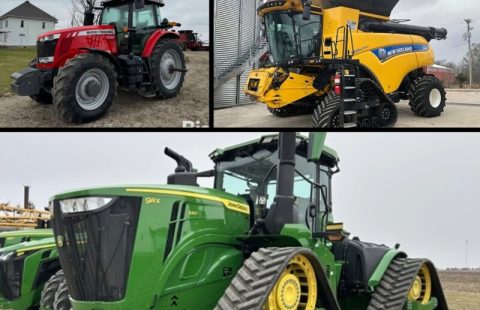
5G provides massive bandwidth and millisecond-level latency, enabling continuous, real-time telemetry from tractors, planters, harvesters, drones, and IoT sensors in the field. Farmers receive instant insights into machinery status, soil conditions, and crop health—all in real time Telecom Trainer.
2. Autonomous Equipment Control
With ultra-reliable low latency communication (URLLC), 5G allows operators to remotely control tractors, drones, and field robots from central hubs or homes. Commands and sensor feedback happen almost instantly—ensuring safe, precise operation without human delay 5G Training and 5G Certification.
3. Edge Computing Enhancements
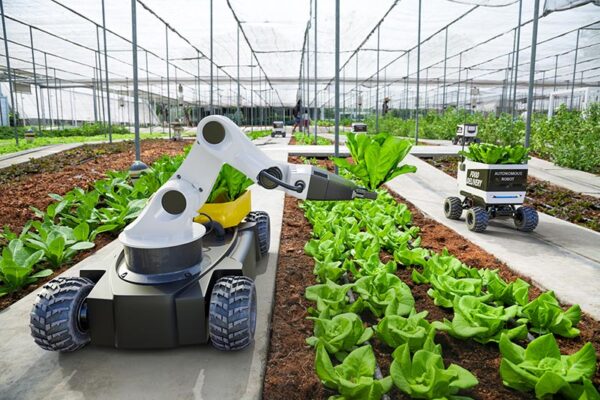
Farming robots—such as selective-harvest platforms—offload heavy image and sensor processing to edge servers via 5G. This architecture speeds up computation dramatically and enables real-time decision-making without power-hungry onboard processors. One test system improved harvesting robot speed nearly 18× versus on-device processing arXiv.
4. Scalable Machine-to-Machine Connectivity
5G’s ability to support massive IoT connections allows thousands of sensors and equipment components to operate concurrently. This is ideal for precision farming where high-density sensor deployment is common—and yet traditional networks struggle to keep up Telecom Trainer5G Training and 5G Certificationgsma.com.
5. Smart Farm Management & Autonomous Tasking
Case studies—like a 2022 project in Jilin Province, China—demonstrate how single operators can remotely control multiple tractors, harvesters, drones, and irrigation systems via 5G networks and live video streams. The result: highly efficient autonomous farming and up to 60% productivity gains over conventional methods gsma.com+1.
6. Predictive Maintenance & Equipment Diagnostics
5G infrastructure enables constant telemetry from equipment systems—monitoring engine health, hydraulic performance, and component wear. AI systems analyzing this data can predict mechanical issues before breakdown, minimizing downtime and optimizing maintenance scheduling husfarm.comtelecomgurukul.com.
7. High-Resolution Crop Imaging & Real-Time AI Analytics
High-resolution imagery—from drones or mounted cameras—is transmitted in real time via 5G to cloud/edge processing centers. AI-powered vision systems detect pests, weeds, or crop stress instantly, enabling spot treatments and precise interventions within milliseconds rti.orghusfarm.comgsma.com.
8. Augmented Reality (AR) Remote Support
Thanks to reliable 5G bandwidth, service technicians can deliver AR-guided remote assistance, overlaying diagnostic instructions and parts diagrams while troubleshooting machinery. This improves repair accuracy and reduces field service visits iot.telekom.com.
9. Enhanced Connectivity for Rural & Remote Farms
Many farms lack consistent broadband access. Emerging connectivity models like BYON (Bring Your Own Network) combine 5G with temporary or satellite links to create mobile high-bandwidth coverage zones. This enables precision-ag equipment monitoring even in remote or underserved regions arXiv.
10. Supporting Sustainability & Food Security Goals
Real-time farm telemetry and decision support—backboned by 5G—enable precision irrigation, optimized pest control, and reduced input waste, supporting climate-smart farming and broader food security objectives myjournalcourier.comrti.org5G Training and 5G Certification.
✅ Real-World Use Cases
| Use Case | How 5G Powers It |
|---|---|
| Remote control of autonomous tractors | Live video streams, real-time steering and safety |
| Precision spraying robots | Millisecond AI processing for weed detection |
| Predictive diagnostics | Constant telemetry identifies potential failures |
| Livestock & environmental monitoring | Wearables deliver alerts instantly to central hubs |
| Drone crop mapping | 4K aerial imagery analyzed in near real time |
| AR-based equipment troubleshooting | Live expert guidance overlayed on device diagnostics |
🛠 Considerations & Infrastructure Challenges
-
Coverage Gaps in Rural Areas: Many remote farming areas still lack stable 5G coverage. Multi-connectivity—including satellite fallback or CBRS networks—helps bridge the gap Telecom Trainertelecomgurukul.com.
-
Upfront Costs: Investment is required both for infrastructure (e.g., private 5G networks) and equipment upgrades.
-
Skills & Training Needs: Farmers and technicians need training to leverage 5G-enabled platforms effectively.
-
Data Privacy & Security: Robust cybersecurity protocols are essential to protect sensitive farm data and network access.
-
Open Network Standards: Movement towards Open RAN-based 5G deployments can help lower barriers to deploying networks on farms myjournalcourier.comTelecom Trainer.
🚀 Final Takeaway
5G technology is the key enabler for real-time farm equipment monitoring. From seamless data streaming and remote control to AI accelerated predictive maintenance, 5G turns connected farming visions into everyday operations.
With the right infrastructure and training, 5G-powered precision agriculture delivers smarter, safer, and more sustainable farming—allowing farmers to operate multiple machines from a distance, anticipate equipment issues, and make crop decisions that boost yield and reduce waste.
📡 Want help evaluating connectivity options for your farm or integrating 5G-based monitoring tools into your equipment fleet? I’d be glad to assist.